
Day 2
GNAM Week MM FEB UI
Session 1
Fostering the green mindset: Education-Based Efforts for a Better Future
Delivered by Mr. Aldo Joson
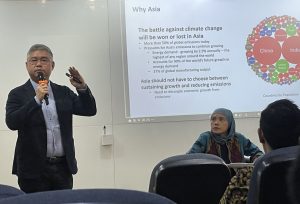
Aldo Joson’s career journey spans across Australia, Singapore, and Indonesia, with experience in management consultancy and operations. Currently based in Sumatra, he leads PT Riau Andalan Pulp and Paper in advancing sustainable practices. His talk centered on fostering a green mindset through education and corporate strategies.
Global Environmental Trends and Challenges
- New Regulations: The EU’s European Union Deforestation Regulation (EUDR) requires traceable timber products, challenging countries like Vietnam and Thailand. Indonesia is better prepared with its detailed compartment-level tracking system.
- Political and Corporate Backtracking: While climate change regulations are tightening, some countries are stepping back from the Paris Agreement. Corporations like Microsoft, Google, and Amazon have also reduced their climate commitments.
- Asia’s Crucial Role: Asia accounts for over 50% of global emissions. With countries like China, India, and Indonesia still developing, climate action in this region is pivotal for global success.
APRIL’s Sustainability Journey
- Compliance to Ambition: APRIL began with compliance and risk mitigation but evolved towards purpose-driven impact strategies. Moving beyond minimum requirements is key to achieving ambitious sustainability goals.
- Purpose-Driven Approach: Sustainability efforts must connect purpose to measurable impacts. Without funding and clear objectives, sustainability efforts risk becoming mere rhetoric.
Key Sustainability Programs
- No Deforestation Commitment: APRIL operates under strict supplier monitoring using satellite imaging. Changes in forest pixel data trigger investigations, ensuring no deforestation occurs.
- Greenhouse Gas Monitoring: APRIL has installed four greenhouse gas towers (among six in Indonesia) that collect real-time data for accurate emissions reporting.
- Sustainability Reporting: APRIL began publishing sustainability reports in 2002. The current strategy includes 18 targets addressing net zero, poverty reduction, and sustainable growth.
Insights and Lessons Learned
- Global Goals, Local Action: While climate change is a global concern, solutions must align with local socio-economic needs. Educating communities about sustainable practices ensures meaningful engagement.
- Collaboration for Success: APRIL partners with specialists to improve biodiversity and conservation without excessive internal staffing.
- Trust Building: Effective conservation often requires addressing local socio-economic challenges like improving agricultural methods and ensuring access to markets for sustainable produce.
- Systems and Processes Over Inspiration: While passionate leadership is essential, success is scalable only when supported by strong processes and systems.
- Celebrate Wins and Learn from Losses: Sustainability is a long-term journey that requires patience, adaptation, and investment in new technologies.
Joson’s key message is that fostering a green mindset demands education, collaboration, and scalable systems. By integrating sustainability into core business practices and aligning global ambitions with local interventions, organizations can make meaningful environmental progress while supporting economic growth.
Session 2
Providing Sustainable and Environmentally Conscious Electricity: Powering Indonesia With Renewable Energy
Delivered by Mr.Suroso Isnandar
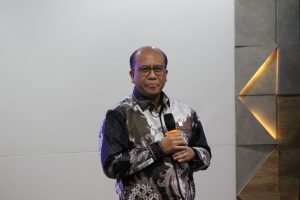
The second session of GNAM Week Day 2 was an engaging and insightful seminar titled “Providing Sustainable and Environmentally Conscious Electricity: Powering Indonesia with Renewable Energy.” The session featured Suroso Isnandar, Director of Risk Management at PT PLN Indonesia, as the keynote speaker. The atmosphere was lively and energetic, with participants from various universities and institutions actively contributing to the discussion by posing thought-provoking questions.
The seminar focused on Indonesia’s energy challenges and how PLN, as the country’s state-owned electricity provider, is working towards a more sustainable and renewable energy system. Suroso began his presentation by explaining a fundamental difference between electricity and other energy commodities such as oil and gas—electricity cannot be stored for long periods. Unlike fuel, which can be stockpiled and transported easily, electricity must be consumed in real-time, making energy transmission and distribution crucial elements in ensuring efficiency.
Indonesia’s Energy Dilemma and PLN’s Role
As a state-owned company, PLN must balance what is often called the energy dilemma—ensuring reliability (energy security), affordability, and environmental sustainability. This balance is particularly significant in a country as vast and geographically diverse as Indonesia, where energy demand and supply are not evenly distributed.
The Indonesian government, under the directive of the President, has urged PLN to maintain energy security by utilizing the country’s abundant natural resources. Indonesia is rich in geothermal energy, thanks to its numerous volcanoes, as well as hydropower resources. These renewable energy sources are key to the country’s long-term energy plans. However, despite these resources, energy production and consumption patterns are not geographically aligned, making efficient transmission and distribution a major challenge.
To address this, PLN is actively developing a Green Enabling Super Grid, which aims to optimize the transmission of renewable energy across Indonesia. This infrastructure project will ensure that electricity from renewable energy sources can reach areas with the highest demand, supporting economic growth and energy accessibility.
Transitioning to Renewable Energy
Suroso then elaborated on PLN’s long-term strategy for energy sustainability, which includes a transition to various renewable energy sources, such as:
- Hydropower
- Geothermal energy
- Solar power
- Bioenergy
- Wind energy
- Battery Energy Storage Systems (BESS)
- Gas, coal, and nuclear energy (to complement gaps in the energy supply)
A key point of discussion was the mismatch between energy supply locations and demand centers. Many of Indonesia’s renewable energy sources, such as hydropower plants in remote areas or geothermal sites near volcanoes, are far from major urban centers where electricity consumption is highest. This disparity underscores the importance of smart transmission systems, which PLN is addressing through the development of a Smart Grid and AI-driven energy management systems.
PLN has also started exploring nuclear energy, adopting AI technology to improve operational efficiency, and integrating biomass farming ecosystems to enhance energy self-sufficiency. The company remains committed to reducing greenhouse gas emissions, aligning with Indonesia’s Net Zero Emission (NZE) 2060 roadmap, as declared at the COP26 climate summit.